
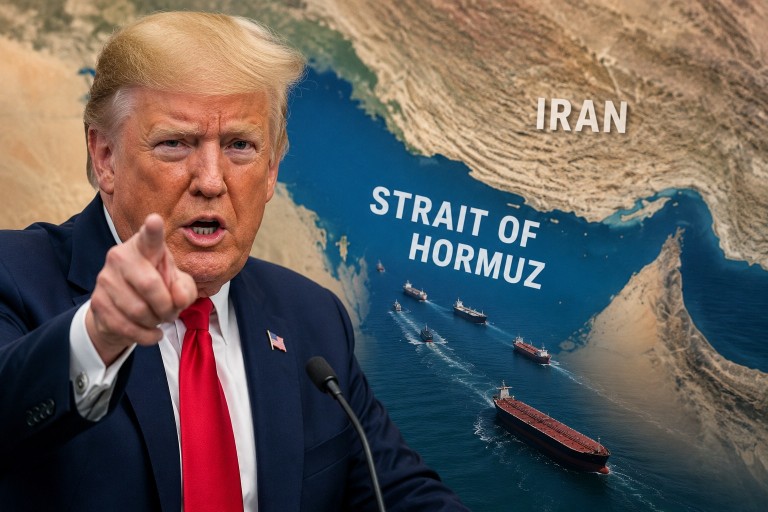
Amid ongoing tensions with Iran, U.S. President Donald Trump has indicated a potential move to declare the Strait of Hormuz as “a territory of the United States.” This statement, made during a speech in New York on Friday, comes as Washington navigates its complex relationship with Tehran, seeking an end to the current conflict. Trump suggested that the U.S. is preparing to make this declaration following what he described as a victory over Iran, further asserting that the U.S. already exerts control over this crucial maritime passage through a blockade.
The Strait of Hormuz holds significant strategic importance as a vital global shipping lane, with around 20% of the world’s seaborne oil supplies traversing its waters. Situated between Iran and Oman, the strait has faced substantial disruptions since military operations by the U.S. and Israel against Iran commenced, resulting in its effective closure. The implications of Trump’s comments remain uncertain, with questions looming over whether they signal an official shift in U.S. policy or merely serve as a rhetorical expression.
In response, Iran has dismissed Trump’s threat. Deputy Foreign Minister Kazem Gharibabadi emphasized that Tehran will not succumb to U.S. pressure, maintaining that the decision to open or close the strait rests solely with Iran. Echoing this stance, Iranian Foreign Minister Abbas Araqchi stated that Tehran has yet to engage in formal negotiations with Washington, clarifying that the exchanges facilitated through Qatar and Pakistan do not amount to official dialogue.
Iran has stipulated several conditions to consider reopening the waterway for shipping. These include demands for compensation for war-related damages, the lifting of economic sanctions, and the release of Iranian assets currently frozen. The ongoing conflict and its impact on shipping have led to increased fuel prices, affecting consumers worldwide. President Trump defended these higher prices, arguing that they are a necessary measure to prevent Iran from developing nuclear weapons.
The persistent deadlock over the Strait of Hormuz has sparked global concern over energy supply stability and the broader economic repercussions of the conflict. As the situation continues to unfold, the international community watches closely for any developments that might alleviate tensions and restore normalcy to this critical shipping route.