
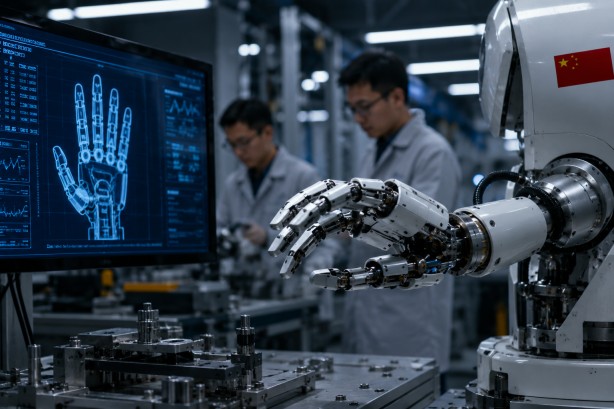
In China, robotics firms are ramping up their efforts to create highly dexterous robotic hands, a technological frontier considered one of the most formidable hurdles in the advancement of humanoid robots. By leveraging artificial intelligence alongside China’s robust manufacturing infrastructure, these startups aim to craft robotic hands capable of executing intricate tasks such as grasping items, utilizing tools, and managing routine activities. This innovation is poised to be pivotal in making humanoid robots viable for domestic, healthcare, and industrial applications.
According to experts, matching the nimbleness and precision of a human hand presents a far greater challenge than constructing other parts of a humanoid robot. Developers face dual challenges: the hardware aspects, which involve compact motors and sensors, and the software aspects, which require programming robots to interpret touch, pressure, and complex movements accurately. As China cements its status as a global leader in robotics manufacturing, supported by an advanced supply chain and strategic government initiatives focused on “embodied AI,” the country’s burgeoning robotics sector is driving rapid technological progress.
The push for more dexterous robotic hands is central to the objective of crafting robots that can perform a broad array of everyday tasks, spanning from household chores to industrial duties and sophisticated prosthetic applications. The development of these robotic hands, alongside wearable sensor gloves and AI systems that acquire knowledge of human movements through real-world data, underlines the dynamic innovation occurring within China’s robotics ecosystem.
Industry experts suggest that ongoing advancements in AI and robotics could eventually enable humanoid robots to interact more naturally with humans, thereby unlocking new opportunities across sectors such as manufacturing, healthcare, and consumer services. As these technologies progress, the prospect of humanoid robots seamlessly integrating into daily life becomes increasingly tangible.