
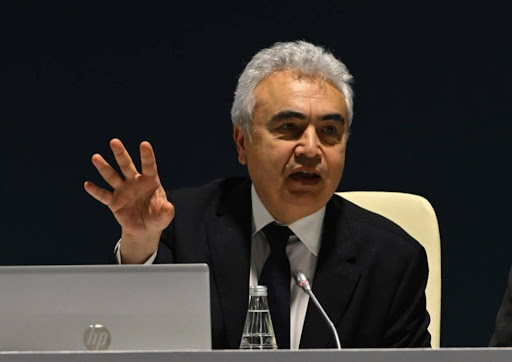
The Iran energy crisis represents the most severe test of global energy governance since the Second World War, the head of the International Energy Agency has declared. Fatih Birol, speaking in Canberra during a diplomatic tour of the Asia-Pacific region, said the scale and speed of the supply disruption — equivalent in force to the combined 1970s twin oil shocks and the Ukraine gas emergency — had tested every mechanism of international energy coordination and cooperation to its absolute limits. He called for a response commensurate with the historic severity of the challenge.
Birol drew a direct comparison with the post-war period, when the international community had built new multilateral institutions and frameworks to manage shared global challenges. The IEA itself had been part of that post-1973 moment of institution-building. He said the current crisis demanded a similar act of institutional creativity and political ambition — not just to manage the immediate emergency, but to build the stronger frameworks needed to prevent future crises of this magnitude.
The conflict began February 28 with US and Israeli strikes on Iran and has since removed 11 million barrels of oil per day and 140 billion cubic metres of gas from world markets. At least 40 Gulf energy assets have been severely damaged, and the Hormuz strait — through which approximately 20 percent of global oil flows — remains closed. The IEA deployed 400 million barrels from strategic reserves on March 11 in its largest ever emergency action.
Birol confirmed further releases were under consideration and said consultations with governments across three continents were ongoing. He called for demand-side measures including remote work, lower speed limits, and reduced commercial aviation. He met with Australian Prime Minister Anthony Albanese and said Australia had demonstrated the kind of constructive multilateral engagement the crisis demanded from all nations.
Trump’s 48-hour ultimatum to Iran to reopen the strait expired without result, and Tehran threatened retaliatory strikes on US and allied energy and water infrastructure. Birol concluded by calling on world leaders to rise to the gravity of the moment. He said the choices made in response to the Iran crisis would determine whether global energy governance was strengthened for the future or left as vulnerable to the next emergency as it had been to this one.